Integrating T-shirt Design - Save the Turtles into Modern Sustainable Apparel Strategies
In an era where consumer consciousness is increasingly driven by environmental stewardship, the apparel industry stands at a pivotal intersection of commerce and advocacy. Brands and independent creators alike are seeking more than just aesthetic appeal; they require designs that communicate values, spark conversation, and drive action. This shift has elevated the importance of high-quality, versatile digital assets that can seamlessly transition from concept to production. Among these resources, the T-shirt Design - Save the Turtles collection represents a strategic opportunity for professionals looking to align their product lines with the growing demand for marine conservation messaging.
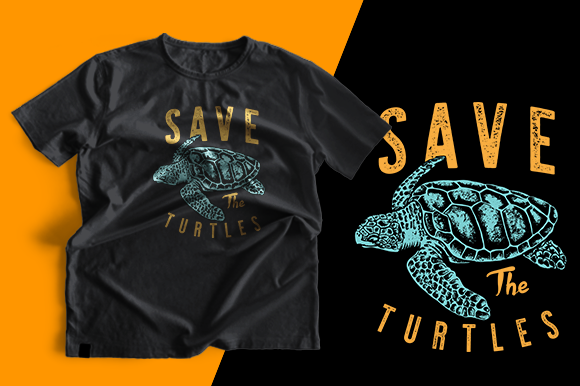
The design landscape is evolving rapidly. The traditional approach of static, raster-based graphics is being replaced by dynamic, scalable vector systems that offer flexibility across various media and printing technologies. The specific value proposition of this design lies not merely in its visual representation of sea life, but in its technical architecture. It is constructed using 100 vector shapes, a decision that fundamentally alters how designers interact with the file. Unlike pixelated images that degrade when resized, this composition allows for infinite scalability without loss of quality, ensuring that whether the artwork is printed on a small pocket logo or a large back-panel graphic, the integrity remains intact.
Adapting to Market Demands: The Versatility of Vector-Based Artwork
For entrepreneurs and freelancers operating in the print-on-demand (POD) sector or managing custom merchandise fleets, the efficiency of the workflow is paramount. The modern marketplace demands rapid iteration and customization. One of the most significant advantages of the T-shirt Design - Save the Turtles asset is its inherent adaptability. The design is built upon a foundation of individual vector elements, which empowers users to modify colors with ease. This feature is particularly critical for businesses targeting diverse demographics or seasonal campaigns.
Consider a scenario where a brand needs to launch a summer campaign focused on ocean preservation. They might prefer vibrant blues and teals. Conversely, a winter initiative or a partnership with a specific charity might call for deeper, more somber tones. With standard raster files, achieving these variations often requires complex editing or starting from scratch. However, because this design is comprised of 100 distinct vector shapes, color changes are straightforward and non-destructive. This capability extends to creating dark-mode variants. The specification notes that the design includes options that are possible and easy to change for dark t-shirts. This eliminates the common friction point where light-colored graphics become invisible against black fabric, allowing creators to produce cohesive collections across different garment colors without needing separate design files.
Bridging Creative Vision and Technical Precision
The relevance of this design extends beyond simple aesthetics; it addresses the technical expectations of professional printing workflows. In the current technological climate, clients expect files that are "ready to print" out of the box. The inclusion of multiple file formats—AI 10, EPS 10, PDF, SVG, and PNG Transparent 300dpi—demonstrates a commitment to interoperability. These formats cover the spectrum of industry standards, from vector-based cutting machines used in screen printing to high-resolution raster files required for direct-to-garment (DTG) printing.
The provision of a README.txt file containing all instructions and font links further underscores the practical utility of this asset. For busy marketers and content creators, time is the most valuable currency. Having immediate access to the necessary typography and clear guidance reduces the learning curve and prevents delays in production schedules. This level of detail reflects a broader trend in the creative economy: the move toward comprehensive, user-centric packages that empower the end-user to execute complex projects with confidence.
The Business Case for Conservation-Themed Merchandise
Why is the focus on turtles resonating so strongly right now? The answer lies in the shifting preferences of the global consumer base. Surveys consistently show that younger generations, particularly Millennials and Gen Z, prioritize purchasing from brands that demonstrate authentic environmental responsibility. Sea turtles serve as a powerful, universally recognized symbol of marine health. They are charismatic megafauna that evoke an emotional response, making them ideal subjects for storytelling through apparel.
When a business incorporates the T-shirt Design - Save the Turtles into their inventory, they are doing more than selling a shirt; they are participating in a cultural movement. This alignment taps into the lifestyle trend of "conscious consumption." Consumers are no longer satisfied with passive support; they want to wear their values. By utilizing a design that is technically robust and visually compelling, companies can ensure that their message is delivered clearly and professionally.
Furthermore, the modular nature of the design supports the concept of limited-edition drops, a strategy frequently employed by streetwear brands and eco-conscious startups. Because the 100 vector shapes can be rearranged, recolored, or isolated, creators can generate unique variations of the core theme without compromising the original artistic vision. This ability to iterate quickly allows businesses to stay ahead of trends and keep their product catalogs fresh and engaging.
Future-Proofing Your Design Assets
As we look toward the future of the apparel industry, the integration of sustainable practices will only deepen. The tools available to creators must evolve to support this mission. The T-shirt Design - Save the Turtles is a prime example of forward-thinking asset creation. It acknowledges that the path from digital file to physical product is becoming shorter and more automated. The transparency of the PNG files ensures clean edges for DTG printers, while the AI and EPS formats remain compatible with the latest iterations of design software, ensuring longevity even as technology advances.
For professionals, the implication is clear: investing in high-quality, flexible vector assets is an investment in operational efficiency and brand consistency. The ability to easily switch between light and dark backgrounds means a single purchase can yield a complete collection, reducing overhead costs and maximizing return on investment. This efficiency is crucial for freelancers and small business owners who need to compete with larger entities that have extensive design departments.
Practical Applications for Creators and Marketers
The utility of this design spans various sectors within the creative economy. Here are practical ways professionals can leverage these features:
- Eco-Friendly Campaigns: Non-profits and environmental organizations can use the design to create fundraising merchandise. The ready-to-print formats allow for quick turnaround times during urgent awareness drives.
- Sustainable Fashion Lines: Independent clothing designers can integrate the turtle motif into their summer collections, utilizing the color-changing capabilities to match seasonal palettes while maintaining a consistent brand identity.
- Corporate Social Responsibility (CSR): Companies looking to engage employees or customers in sustainability initiatives can order custom-branded polos or t-shirts featuring this design, reinforcing their commitment to ocean conservation.
- Digital Content Creation: Influencers and social media managers can use the transparent PNG versions to create mockups and promotional graphics without needing to edit the background, streamlining their content calendar.
The emphasis on 100 vector shapes also opens doors for advanced customization. Designers can deconstruct the image to create smaller icons, patterns, or textile prints that were previously impossible with a single-layered image. This level of granularity encourages creativity and innovation, pushing the boundaries of what is possible with standard apparel decoration.
Conclusion: A Tool for Impactful Storytelling
The T-shirt Design - Save the Turtles is more than a graphic; it is a tool designed for the modern creator who values both artistic integrity and technical precision. In a market saturated with generic imagery, the ability to offer a customizable, high-fidelity design that speaks to a vital cause provides a competitive edge. It bridges the gap between environmental advocacy and commercial viability, offering a solution that is as practical as it is meaningful.
By embracing assets that are built with the future in mind—featuring resizable vectors, multi-format compatibility, and adaptable color schemes—professionals can meet the evolving needs of their audiences. As the world continues to grapple with environmental challenges, the role of design in raising awareness becomes ever more critical. This design offers a pathway to contribute to that dialogue, empowering businesses and individuals to make a tangible difference, one shirt at a time.
Whether you are a seasoned entrepreneur launching a new line or a freelancer seeking to expand your portfolio, the combination of aesthetic appeal and technical robustness found in this collection makes it a standout choice. It invites you to participate in a larger narrative of protection and preservation, proving that effective design can indeed save the day—and the turtles.