Streamline Your Restaurant Branding with a Professional Food Menu Flyer
In the fast-paced world of food service, first impressions are everything. Whether you are a bustling street food vendor, a cozy café, or an upscale bistro, your menu is often the primary tool for communicating your brand's value to potential customers. A Food Menu Flyer does more than just list prices and dishes; it tells a story, evokes appetite, and drives sales. However, creating one that stands out requires a blend of artistic vision and technical precision. This is where a well-structured, fully editable template becomes an indispensable asset for modern restaurant owners and designers alike.
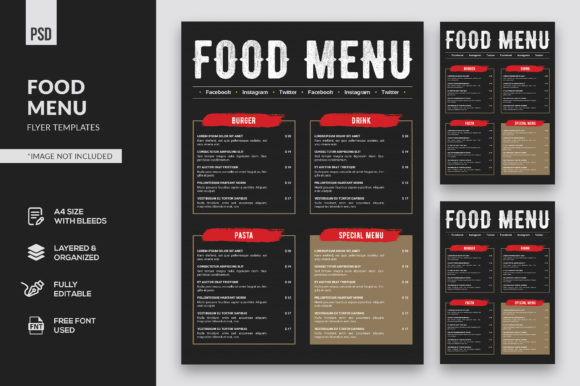
When searching for the right design solution, quality and flexibility are paramount. The ideal template should not only look stunning but also adapt seamlessly to your specific needs without requiring hours of complex manipulation. The template described here offers exactly that: a highly organized structure where images, text, and colors can be fully edited. This level of control ensures that your final output perfectly matches your brand identity while maintaining professional standards.
The Power of Organization in Design Files
One of the most frustrating aspects of working with graphic design files is disorganization. Imagine opening a PSD file and finding hundreds of layers named "Layer 1," "Copy 2," or "Group 3." Navigating such chaos can lead to errors, wasted time, and frustration. That is why this particular Food Menu Flyer template prioritizes organization from the ground up.
All PSDs included in this package are very well organized, with every layer grouped by name. This logical structure allows users to find exactly what they need instantly. If you want to change the font size of the daily special, you don't have to hunt through the entire document. You simply locate the specific group, open it, and make your adjustments. This efficiency is crucial for busy professionals who need to iterate designs quickly for different campaigns or seasonal updates.
Smart Objects: The Key to Effortless Customization
Perhaps the most valuable feature of this template is the use of Smart Objects within the image containers. In the world of Adobe Photoshop, Smart Objects act as intelligent placeholders that preserve the original content and resolution of an image. When you replace a placeholder image with your own photo of a dish, the Smart Object automatically adjusts to fit the frame while maintaining its quality.
This functionality makes it incredibly easy for you to add images and edit files without worrying about pixelation or distortion. You can drop in high-resolution photos of your signature burgers, fresh salads, or artisanal cocktails, and the template handles the rest. It removes the technical barrier for non-designers, allowing restaurant managers to update their marketing materials with confidence. No more stretching images or dealing with jagged edges; the process is intuitive and foolproof.
Technical Specifications for Print Excellence
While digital screens are ubiquitous, the tangible impact of a printed flyer cannot be overstated. For restaurants, handing out a physical menu at a trade show, leaving one on a table, or distributing it in a local neighborhood remains a powerful marketing strategy. To ensure these flyers look crisp and professional, the template adheres to strict industry standards.
The dimensions are set to the international standard of 210x297 mm (A4), making it versatile for various distribution channels. More importantly, the file is prepared in CMYK color mode at 300dpi. This combination is the gold standard for offset printing, ensuring that the vibrant colors of your food photography translate accurately from screen to paper. Without this specification, colors might appear dull or muddy once printed.
Furthermore, bleed is included in the design. Bleed refers to the area outside the trim line that extends beyond the edge of the page. Including bleed prevents unsightly white borders from appearing if the cutting machine shifts slightly during production. By providing a print-ready file with these exact specifications, the template eliminates the guesswork for commercial printers, saving you both money and time.
Seamless Integration into Modern Workflows
Modern marketing workflows demand speed and agility. Trends change, menus update, and promotions shift weekly. A rigid design system cannot keep up with this pace. This Food Menu Flyer template fits perfectly into agile environments because it is designed for rapid deployment. You can edit it quickly and easily, allowing you to respond to market demands in real-time.
Consider a scenario where a restaurant wants to launch a summer promotion featuring fresh seafood. With a layered and organized template, the team can swap out the background imagery, update the text to reflect the new seasonal items, and adjust the color palette to match summer vibes in under an hour. There is no need to start from scratch or hire an expensive designer for minor tweaks. The workflow becomes collaborative and efficient, empowering the internal team to take ownership of their branding.
Accessibility Through Free Fonts
A common hurdle in using templates is font licensing. Many designers purchase expensive fonts only to discover later that they cannot legally distribute them or that the client doesn't have the license to use them. This template solves that problem by utilizing free fonts. This means you can download the file, open it, and start editing immediately without worrying about missing font warnings or legal complications.
The inclusion of a font link in the main file further simplifies the process. Users are guided directly to the source where they can download the necessary typefaces. This attention to detail ensures that the typography remains consistent and readable, which is critical for legibility in a menu context. Clear, attractive typography encourages customers to read through the offerings rather than skipping over them.
Why Structure Matters for Conversion
It is not enough for a flyer to just look good; it must also function effectively. The template is described as being well organized and structured, a quality that directly influences customer behavior. A cluttered layout confuses the eye and obscures important information like pricing or dietary labels. In contrast, a structured design guides the viewer's gaze naturally from the headline to the featured dishes and finally to the contact details.
When the hierarchy of information is clear, customers can make decisions faster. They can scan the categories, identify their preferences, and feel confident in their choice. This ease of use reduces friction in the ordering process, whether the flyer is being used as a standalone advertisement or as part of a larger digital campaign. The balance between visual appeal and functional clarity is what separates a generic flyer from a high-converting marketing tool.
Practical Considerations for Selection
Before committing to any design resource, savvy buyers consider several factors. Cost-effectiveness is obvious, but long-term usability is often overlooked. This template offers exceptional value because it is fully editable. You are not buying a static image; you are purchasing a dynamic tool that can be reused indefinitely. Whether you need to create versions for lunch specials, dinner menus, or holiday events, the base file serves as a reliable foundation.
Another consideration is the learning curve. While professional software like Photoshop is powerful, it can be intimidating for beginners. The smart object and organized layer structure of this Food Menu Flyer significantly lower the barrier to entry. Even those with limited design experience can produce results that look professionally crafted. This democratization of design tools allows small business owners to compete visually with larger chains without needing a dedicated creative department.
Additionally, the print-ready nature of the file addresses the common issue of rejections by print shops. Many amateur designs fail because they lack proper bleeds, are in RGB instead of CMYK, or are too low resolution. By starting with a file that already meets these criteria, you ensure a smooth transition from design to production. This reliability builds trust with your service providers and guarantees that the final product looks as good as the preview on your screen.
Maximizing Impact with Visual Storytelling
Ultimately, the goal of any menu flyer is to stimulate hunger and desire. High-quality imagery plays a pivotal role in this psychological trigger. Because the image containers are Smart Objects, you are encouraged to use high-resolution, appetizing photos. The template supports this by providing ample space for visuals without compromising the layout's integrity.
When you combine beautiful food photography with clean, editable text and a cohesive color scheme, the result is a compelling narrative. The flyer becomes more than a list of ingredients; it becomes an invitation to an experience. The ability to tweak colors allows you to align the flyer with your restaurant's ambiance—warm tones for comfort food, cool tones for seafood, or bold colors for energetic fusion cuisine. This customization ensures that the flyer feels authentic to your establishment.
By leveraging a tool that combines technical precision with creative flexibility, restaurant owners can elevate their marketing efforts. The Food Menu Flyer template represents a bridge between professional design standards and practical user needs. It empowers businesses to maintain a polished, consistent, and effective presence in a competitive marketplace, proving that great design is accessible to everyone willing to invest in the right resources.